Guide to tachograph cards + latest driver card (G2V2)
Types and latest generation of driver cards (G2V2)
Are you familiar with the different types of digital tachograph cards? This guide should decode the mystery and provide a comprehensive explanation. Tachograph cards are essential to ensure road safety and compliance with the rules for drivers of heavy vehicles.
Fasten your seatbelts and join us as we delve into the world of digital tachograph cards – what they are, how they are used, and why they are important.
Digital tachograph card: What is it?
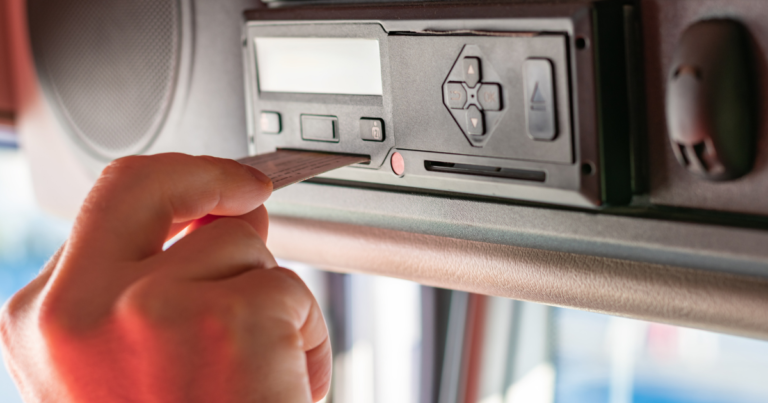
A digital tachograph card is a "smart" card that records and stores important information about the driver's activities, vehicle speed and other data. The card is inserted into the tachograph and serves as personal identification for drivers, companies, workshops and enforcement authorities. Each type of digital tachograph card serves a specific purpose in the overall management of tachograph data.
Tachograph cards - what are they used for?
Tachograph cards play a crucial role in ensuring accurate recording and monitoring of driver activities and promoting safety on our roads. Understanding their functions is essential for both drivers and industry stakeholders to navigate the complex network of regulations governing transport operations.
In a commercial vehicle, a digital tachograph card is inserted into the tachograph by either a driver, workshop personnel, or enforcement authorities. During requests from the Danish Road Traffic Authority and company inspections by the Police, the collected data is used for compliance checks of the driving and rest time regulations, as well as on roads for accident investigations. The digital tachograph records the vehicle's speed, distance, and driver's activity, among other data.
Types of tachograph cards
There are four types of tachograph cards:
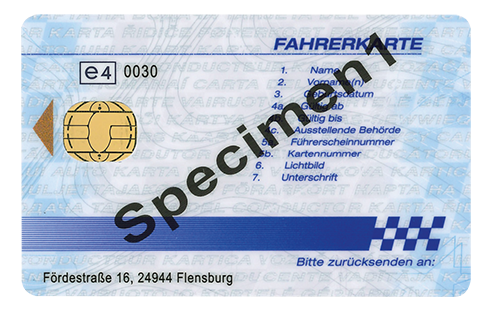
Driver card
The driver card is a personal microchip card, always carried by the driver and contains details such as driving time, breaks, rest periods and violations of driving and rest time regulations and the Working Time Directive. It should not be confused with a driving license, as it serves a completely different purpose. Typically, a driver card is valid for 5 years. This card must be inserted into the tachograph each time the vehicle is driven.
If you want to read how to renew your driver card in Denmark, click here.
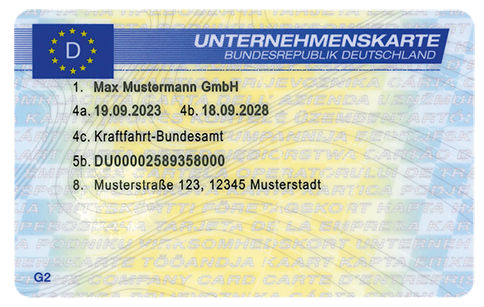
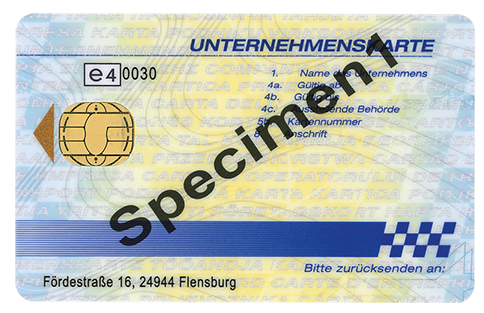
Company card
The company card is a microchip card issued to transport companies and used to lock in data before using a new vehicle/tachograph. The company card functions as the key to tachograph data. This card cannot be used as a substitute for a driver card. All companies that have vehicles with tachographs must obtain a company card.
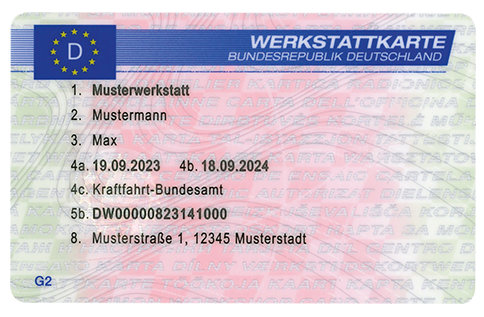
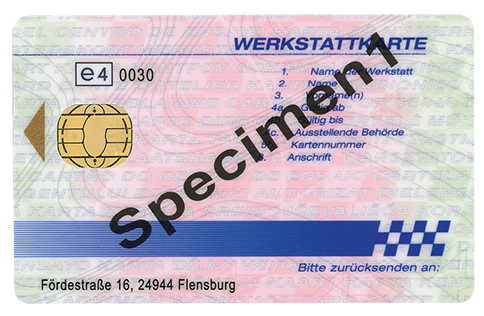
The workshop card allows authorized personnel at certified workshops to perform maintenance on the digital tachograph display system by calibrating or downloading stored data. Only authorized workshops can install, activate, calibrate, inspect and download digital tachographs. It is the only card that is issued with a personal PIN code and is only valid for one year.
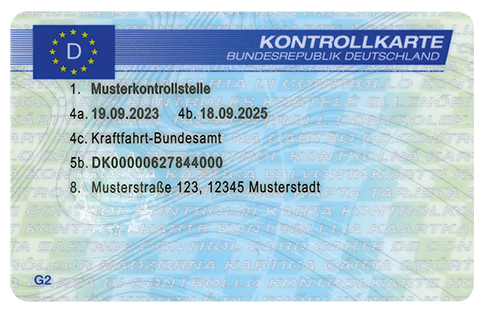
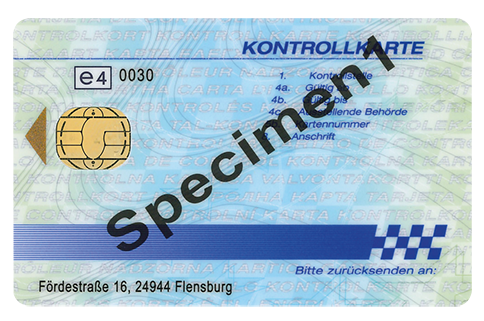
The control card is used by the authorities, such as the police and the Danish Road Traffic Authority, to carry out inspections and ensure compliance with tachograph regulations, driving and rest time regulations and the Working Time Directive. This card gives the police and the Danish Road Traffic Authority unlimited access to the tachograph data, even if the company has introduced a “lock” with their company card.
What about the new smart tachograph (G2V2) driver cards?
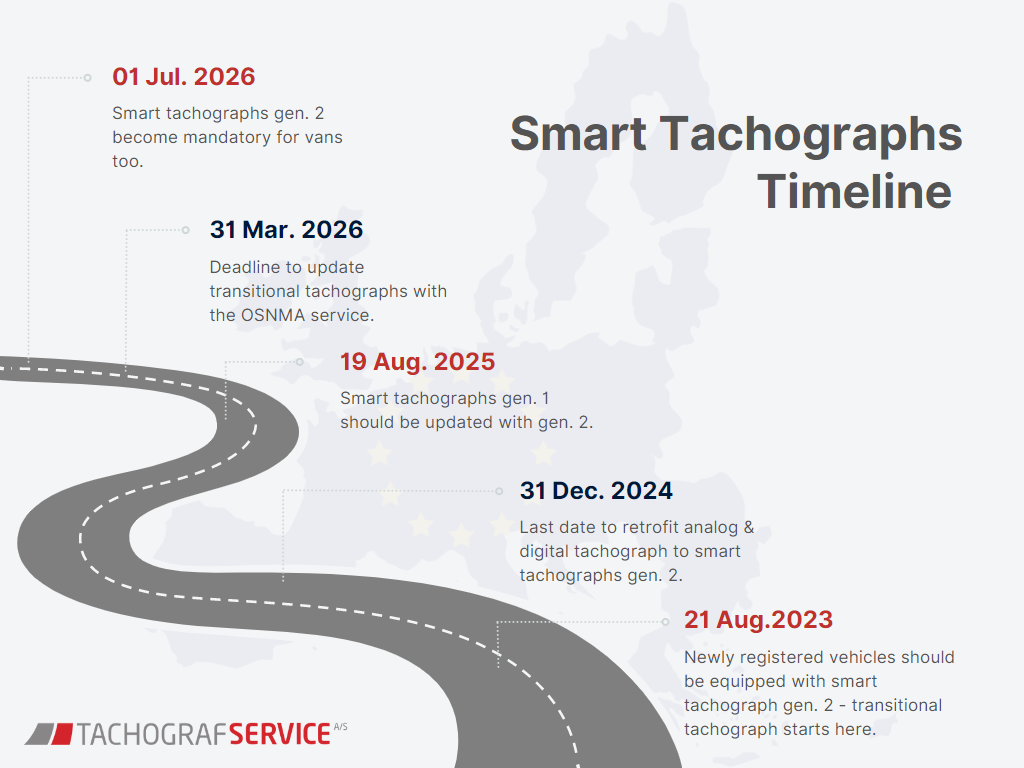
Since August 21, 2023, all newly registered vehicles have been equipped with the new smart tachograph (G2V2).
Due to the limited availability of the latest smart tachographs, the European Commission has allowed EU member states to grant operators until August 18, 2025, to replace their heavy vehicles registered between August 21, 2023, and December 31, 2023, with SMT2 units.
In the following years, the older tachographs will be replaced with the new smart tachographs (G2V2).
Currently, there are two generations of driver cards in circulation – Generation 1 (G1), which was distributed before June 2019 and does not record position data, and Generation 2 (G2V1), issued since June 2019, which has allocated storage space for position data, but not for read/write operation data.
The new driver card (G2V2) will also be issued together with the smart tachograph (G2V2). The old driver card will still function correctly with the new tachograph, and the new card will also work with older generation tachographs. This means that replacing the current driver cards is not a mandatory requirement, and the tachographs do not need to be replaced immediately.
What's new about G2V2 driver cards?
The new driver cards contain data on read and write information, information on automatic border crossings, and expanded memory for data.
The latest G2V2 driver cards have doubled storage capacity from 28 days to 56 days.
At the same time, from the end of 2024, authorities throughout the EU can carry out checks of 56 days during roadside inspections, instead of 28 days today. In principle, this allows for twice as many activities within the same download period, and the data will remain intact. However, the appearance of the cards is identical to the previous generation (G2V1).
As you may have experienced with previous generation cards, there is a risk that the data from the first days will be overwritten if the driver has a lot of activities, even if the data is downloaded according to the rules.The expanded memory on the new driver card will prevent this problem, and with increased control from authorities and police throughout Europe, the driver will be protected from losing data that has already been read correctly.
Read more about the new smart tachographs and which functions will not be available in the beginning here.
At Tachografservice, it is important to us that our customers are updated about new products, laws, and general news from the industry.
At the same time, we would like to offer our customers to be the first to receive offers, promotions, useful tips, and tricks for everyday life, as well as other relevant news.